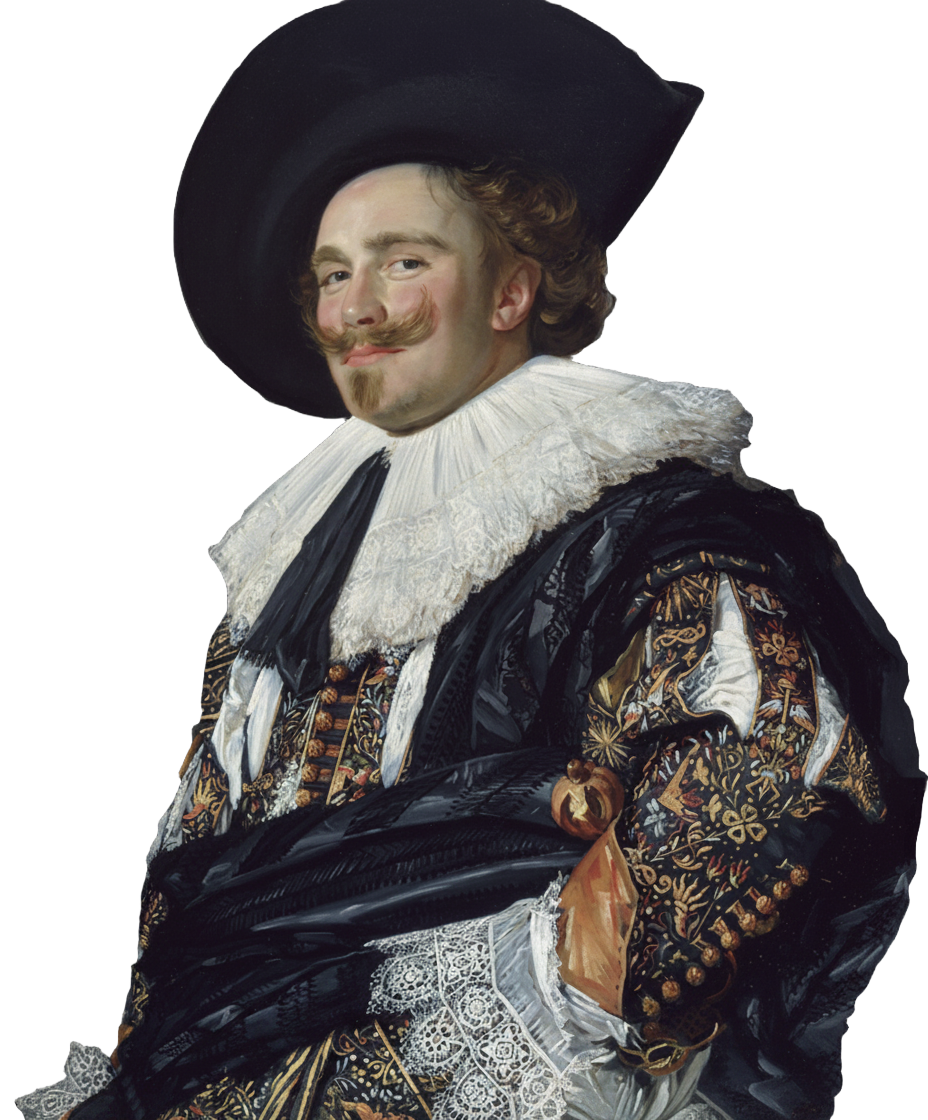
13. The Cavalier Constitution: one rule for them…

If there is no constitution, why this should be? When, why and how did the elite that ran the nation of England (as it then was) decided not to write a set of rules that would give rights and power (sovereignty) to the people and bind the moral actions of political leaders?
The decisive period of the formation of Britain’s political structures was the autumn and winter of 1688-9. The Bill of Rights of 1689 (HC 1688: sometimes dated to 1688) is considered a foundational document. The elements of what later came to be called the British Constitution – the notion that parliament is sovereign and the monarch undertakes not interfere in government – were laid down between 1689 and 1707. They were subsequently modified but the core of the political system has not changed since then.
The Glorious Revolution – which was neither glorious nor a revolution – was the culmination of a phase of history that began on 22 August 1642 (if not earlier), when Charles I declared war on those of his subjects who would not accept that the “constitution” demanded absolute obedience to the divine right of kings. Two civil wars and a republic later, his son, Charles II was “restored” to the throne of his insurrectionist father.
The Stuart dynasty’s second term in office was not, as has been suggested (Wolf-Phillips, 1984), a return to the prewar world. Charles II’s regime, supported by the aristocracy, landowners and economic, religious and military interests, was a reaction to the experiments of the Interregnum. It was a revolution in its own right, although sympathetic historians slink from this description. Its ideology was marked by vengeance and the suppression of dissent and all divergent thinking. It engaged in a savage process of revenge and historical blackwashing (Hill 1984).
Not only the regicides were exterminated in the most brutal fashion but so were the lawyers who had endeavoured to apply the law formulated by the Long Parliament (Robertson 2006). All dissent was similarly punished in a barbaric fashion (Spencer 2015). The Instrument of Government (1653) was rejected in its totality, but also dismissed were all preceding proto-constitutions: The Grand Remonstrance (1641), the Nineteen Propositions (1642), the Heads of the Proposals (1647) the Agreement of the People (1647-9) and the conclusions of the Putney Debates (1648).
The conspirators of the Glorious Revolution who ended James II’s shambolic rule by an act of treason inherited this abhorrence of very idea of a constitution.
The Bill of Rights they produced to cover their tracks, a document signed between two illegitimate parties, is a highly problematic document and served at the time to avoid the creation of a constitution.
William III was a foreigner and a conqueror who won his throne by a coup d’etat. He was not, according the theory of monarchy, the rightful king. He owned his throne to the army he had brought with him. he had no constitutional legitimacy to act in the way he did. The Convention Parliament that passed the Bill of Rights, as Wolf-Phillips (1984) reminds us, was “convened in the absence of a king and lawfully constituted government.”
Parliament, constitutionally convened or not, was not the respectable, representative institution we suppose it to be today. The House that lay the foundation for the constitution in 1689 was corrupt and unrepresentative in the extreme. At the most generous estimate 98.5% of the population was disenfranchised[1]. Burke later called them the “swinish multitude”.
Most MPs were returned by uncontested elections. There were no secret ballots. Favouritism, cronyism, nepotism and other forms of corrupt influence were widely used. Bribery was rife: it was necessary to pay the Speaker, the Clerk, the Serjeant and other officials to ensure the passage of a bill (Wolf-Phillips, 1984).
The Commons was anything but diverse and representative. All MPs were well-off Anglican men. As they were unpaid: MPs had to have independent means. “The English country gentleman governed England; in the countryside, and as a group in the House of Commons.” (Wolf-Phillips, 1984). This was the parliament credited with creating the modern constitution. The deal it made with William served the ends of its members not the people.
Thus the wrongful king called an illegitimate assembly and between them they formalised a reactionary arrangement that could, with more pragmatism on the part of Charles I, have been reached in 1640.
This agreement did not amount to anything approaching a constitution. William was not a “constitutional monarch”. He governed on the terms that suited him, as the holder of the sword and on the basis of alliances made. His successors never became “constitutional monarchs”, because neither parliamentarians nor royal families saw any advantage to themselves in promulgating a constitution that would legally tie their hands.
The deal struck in the Bill of Rights created the conditions for the development of parliamentary sovereignty but it did much more than that. It’s essential features were:
1) a mutual legitimisation of the two insecure parties. William could claim the support of a “representative” parliament and parliament could shelter under the monarchy and the myth of hereditary authority.
2) Henceforth, parliament could dictate the line of royal succession. It could select and deselect the monarch who exercised nominal authority over it.
3) Neither side needed nor wanted a constitution. A constitution would have included other interests and laid down principles of equality and enfranchisement. The monarchy became a constitutional monarchy without a constitution; and the constitution became whatever anyone in power and a public platform said it was.
4) Parliament was given carte blanche – effective from the last use of the royal veto in 1707. It could go back on anything that it had previously decided or agreed to. The Bill of Rights, for instance, prohibits cruel punishment but cruel punishments continued to be handed out because parliament had the last word and there was no independent tribunal capable of ruling it out of order.
5) The methodology of government was left up to parliament, and kept vague. Precedent (the legend of the “ancient constitution) and convention would be claimed as rules. Any procedure could be made up for pragmatic or expedient reasons. Erskine May, long before the arrival of democracy, would formalise traditions developed for members’ own purposes.
6) Republicanism was reviled and treated with derision – or punished as treason.
7) Anglicanism became the official state religion and other religions were persecuted.
8) “Rights” meant rights for members of the elite that ran the country not the common people.
9) The Bill of Rights talks of “free” elections to parliament but does not mean this in the modern sense; rather that the House of Commons takes upon itself the power to decide how its members will be elected – ie by the usual corrupt methods.
10) A large part of the Bill of Rights has nothing to do with good government. It is vindictive propaganda justifying the driving out of the rightful king, James II because of his religious denomination and his replacement by the leader of an invading army.
The settlement reached in the Bill of Rights allowed for the further developments of the constitution: the fusion of monarchy and parliament by the prime minister; the unstoppable growth of an almighty executive acting in the monarchs name, which was only partly, indirectly and periodically accountable to an electorate; and the suppression of free speech (except in parliament) and free assembly (except for the landowning classes and parliamentarians) as parliament or whoever controls it, or acts with the reserves power, sees fit. In short, the outcome of the Glorious Revolution was unconstitutional government.
In the coming decades and centuries, the gentlemen of a corrupt unrepresentative parliament would use their unlimited powers not for then good of all, and to allow political modernisation, but to prevent – often with extreme cruelty and violence – all competing ideas of how society should be organised and governed from taking hold.
[1] The electorate in 1831 has been estimated at 200,000–435,000 ie 1.5%–3.35% of the population of Great Britain We do not know how many people could vote in 1688-9 but it is reasonable to suppose that 96–98.5 % were disenfranchised. (Porrit, 1903)